Billions of dollars are spent each year on the lives of consumers on loan fraud prevention and identity theft loans, which harm credit scores and cause years of financial headache.
This guide includes red-flag checklists, step-by-step prevention steps, how the lenders can be verified, recovery procedures and downloadable materials for safe online lending.
Quick Facts: Why This Matters
Loan fraud and identity theft have direct and indirect financial consequences, and are damaging in the short term and in the long term, as well as damaging to the lender. They have to be detected promptly and the lender must cooperate. The FTC claims that in 2023, consumers lost more than 10 billion of their money to fraud in its effort to curb such activities, with identity theft being one of the most common categories of complaints.
It might take months or years to recover the fraudulent loans, which would impact credit scores, loan approvals and background checks on employment. When detected early in a period of 30-60 days, the recovery is better and the dispute of the credit report is also less complex.
Common Fraud Types & How They Affect Loans
Identity-Theft Loans
Criminals use stolen personal information such as Social Security Numbers, date of birth, address, and others to apply for loans. Those victims learn about fraud by being alerted by a credit monitoring service, failing to be approved for credit, or getting collection calls on debts they have not accrued.
Freeze your credit with all three credit bureaus and subscribe to credit monitoring agencies to get real-time alerts.
Synthetic Identity Fraud
Fraudsters make up fake identities using the real Social Security Numbers (in most cases, those of children) along with their fictitious names and addresses. These artificial identities accumulate credit histories with the course of time and then debit the credit limits and vanish.
Place credit files of children on freeze in your state in case they exist.
Account Takeover
Hackers access the bank or already existing loan accounts and alter the contact details and demand more money or even divert the payments. Takeovers can go unnoticed by the victims until the payments do not go through or when the victims get the notification at the addresses they are not familiar with.
Activate multi-factor authentication on all financial accounts and check the account activity regularly.
Imposter Lender Scams
False lenders build up organizations that look professional, assure guaranteed approval and charge advance payments as processing fees and vanish. These frauds rob the money and personal details as well, which are utilized by criminals to commit other frauds.
Check the licensing of the lenders by the state regulators prior to giving any personal information or financial information.
Red Flags: How to Spot Unsafe Lenders or Fraudulent Loan Activity
Watch for pressure tactics, unusual methods of payment, and unverifiable licensing in scrutinizing potential lenders.
| Red Flag | Why It Matters | What to Do Immediately |
| Unsolicited pre-approval emails | Legitimate lenders rarely send unsolicited loan offers | Verify sender domain; don’t click links |
| Demands for crypto/gift card payment | No legitimate lender accepts these methods | Report to FTC; cease communication |
| No verifiable license | Unlicensed lenders may be fraudulent | Check state regulator database |
| Missing or poor HTTPS | Indicates insecure data transmission | Never submit personal information |
| Misspelled domain names | Phishing sites mimic legitimate lenders | Verify official website through search |
| Requests for full SSN via email | Legitimate lenders use secure portals | Never provide via email or text |
| Guaranteed approval claims | No lender guarantees approval without review | Extremely high fraud indicator |
| Upfront fees before disbursement | Legitimate lenders deduct from proceeds | Report to authorities; don’t pay |
Step-by-Step: How to Verify a Lender Before Applying
Confirm license, reviews, contact details, and secure website facilities, and regulatory registration, then provide personal information.
Verification Checklist
- Check Licensing: Enter state regulator databases of lender license numbers and confirm that they are active.
- Verify Website Security: Confirm HTTPS encryption, privacy policy and secure upload of documents.
- Research Reviews: Check Trustpilot, Better Business Bureau, and Consumer Financial Protection Bureau complaint databases.
- Confirm Contact Information: Review physical location, active telephone number, and a responsive customer service.
- Review KYC Requirements: Legitimate lenders conduct credit checks and seek to verify the incomes using safe approaches.
- Avoid Upfront Payments: Never pay fees in advance of loan disbursement other than fees disclosed and deducted from proceeds.
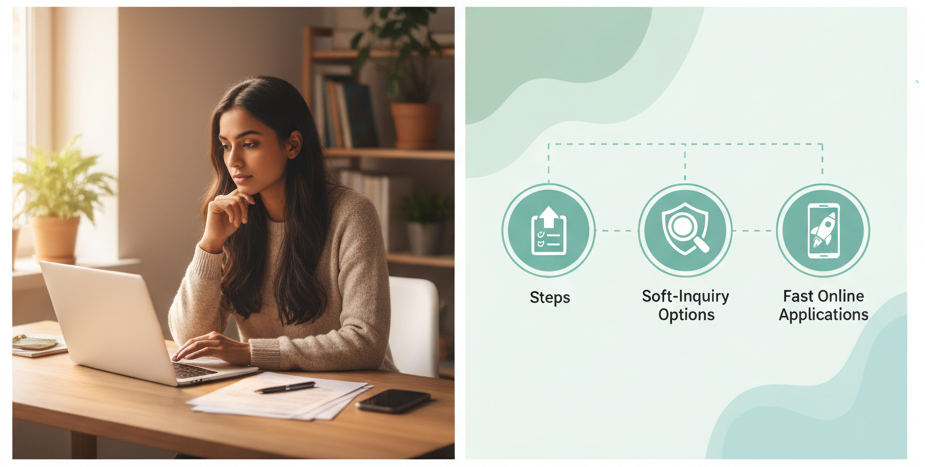
- Use Prequalification: Take advantage of soft-pull rate checks that don’t impact credit scores.
Lender Verification Call Script
I am thinking about taking out a loan. Would you mind giving me your license number and the web address of the state regulator where I can verify this license?
What are the charges, and when are they charged in relation to the issuing of funds?
How many days do you take to receive the application to payment, to approve and fund?
Prequalification/ Soft credit pulls/ Do you provide prequalification before formal applications?
How Identity-Theft Loans Happen — Lifecycle & Prevention
The fraudsters obtain personal information, take credit and collect money and then redirect funds-so stop this by managing the exposure of data.
How Personal Information is Harvested
Data Breaches: Hackers steal data of firms that store customer information and sell it on the dark web marketplaces.
Phishing Attacks: Fraudulent emails or texts that deceive the victim into giving out credentials or other personal details.
Social Media Mining: It involves criminals targeting birthdays, addresses, family names, and employment information in the publicly available social media accounts.
Dumpster Diving: Physical theft of discarded documents that have account numbers, Social Security Numbers, or other financial statements.
How Fraudsters Pass Automated Underwriting
Stolen Social Security Numbers and fabricated information result in profiles that are verified in basic checking. Synthetic identities develop credit history gradually, and initially look plausible to automated systems, and then perpetrate a massive fraud.
The service of address verification might not address the recent address changes or newly made synthetic accounts with no history.
Prevention Strategies
Credit Freezes: Prevent new credit applications by freezing files at Equifax, Experian, and TransUnion.
Multi-Factor Authentication: Multi-factor authentication is used, whereby, in addition to passwords, account verification requires a number of steps to access the account and perform transactions.
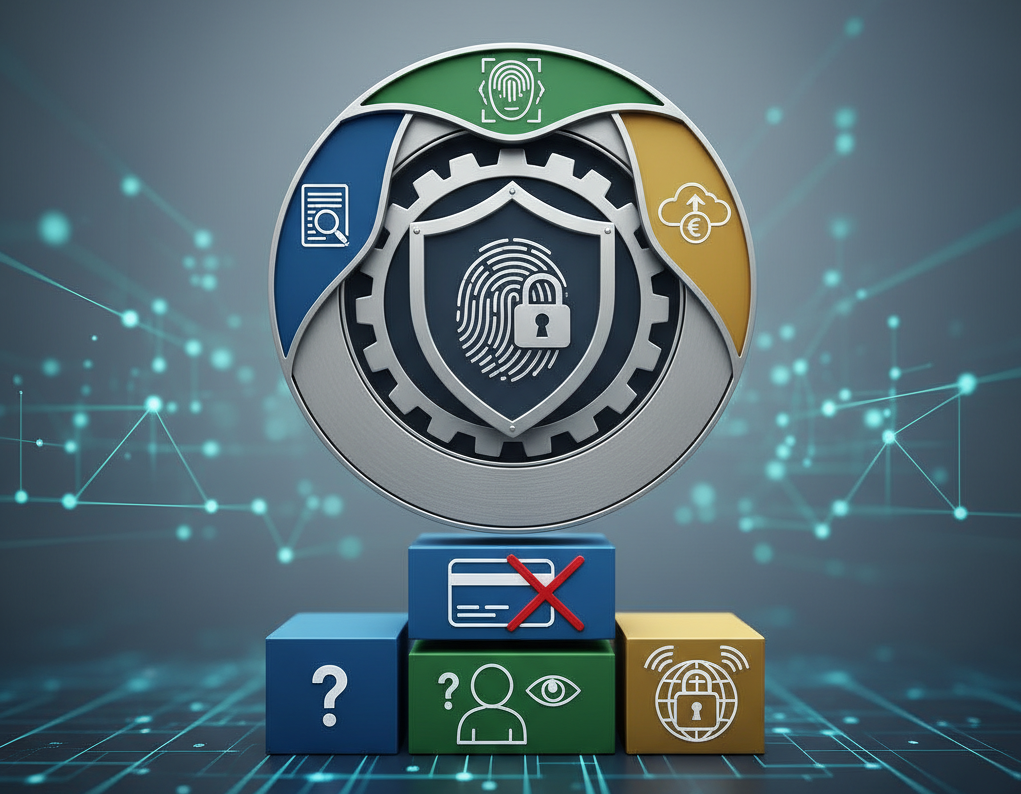
Document Verification: Lenders should verify government IDs using document authentication and biometric liveness checks.
Employer Verification: Direct verification with employers reduces risk from fraudulent income documentation.
Safe Online Lending Best Practices (For Borrowers)
Protect personal information by using licensed lenders, secure devices and unique passwords and credit freezes when necessary.
Security Checklist
- Strong Passwords: Store passwords through password managers as unique passwords on every financial account.
- Secure Networks: Use only on private networks; use no public Wi-Fi to transact financial services.
- Enable MFA: Multi-factor authentication should be enabled on all lending and credit monitoring accounts.
- Prequalify First: Soft credit pulls should be made to check rates before formal applications with hard inquiries are made.
- Verify Payment Methods: Never deposit any kind of funds using gifts, cryptocurrency, or wire transfers prior to receiving the loan proceeds.
- Document Everything: Save all the communication, application confirmation, and the IDs of the transactions to be used in the future.
What to Ask Lenders
“How do you protect my personal information during the application process?”
“What encryption standards do you use for data transmission and storage?”
“How will you verify my identity, and what documents will you require?”
“Do you report payments to credit bureaus, and how do I verify accurate reporting?”
What to Do If You Suspect a Fraudulent Loan
Act immediately—contact lenders, freeze credit, file reports, and follow up in writing to minimize damage and begin recovery.
Recovery Action Steps
Step 1: Contact the Lender’s Fraud Team: This step requires a call to report suspected fraud, request a freeze or cancellation of the application, as well as a written confirmation.
Step 2: Place Credit Freeze and Fraud Alert: Contact Equifax, Experian, and TransUnion to freeze credit files.
Step 3: File Identity Theft Report: Submit the report at IdentityTheft.gov to get an official Identity Theft Report to use in credit disputes.
Step 4: File Police Report: Go to the police department in the area where you are to file a report and get a report number to use on credit bureau disputes.
Step 5: Dispute Fraudulent Accounts: Send dispute letters to credit report agencies with copies of the Identity Theft Report and the police report.
Step 6: Track Communications: Have a record of all communications and records of all calls, emails and letters with date and time, names and reference numbers.
Step 7: Consider Credit Monitoring: Enroll in identity theft protection services to monitor and get alert notifications.
Step 8: Explore Restitution Options: Find out about chargeback, call the state attorney general and consumer protection attorney when necessary.
Safe Lending Policies Lenders Should Implement
Strengthened KYC, transaction tracking, device fingerprinting, and more than two levels of authentication mitigate the risk of fraud among lending institutions.
Recommended Lender Controls
Identity Check: Introduce document authentication and biometric comparison with the government IDs.
Device Fingerprinting: Monitor the properties of the device, IP addresses and behavior patterns to detect suspicious applications.
Fraud Detection Systems: Fraud cases are detected with the use of velocity rules, geolocation risk scoring, and pattern analysis.
Synthetic Identity Detection: Compare personal data with known trusted sources to determine fake profiles.
Bank Account Verification: Before issuing funds, verify ownership by using micro-deposits or instant account verification APIs.
Transaction Monitoring: Analyze trends continuously to identify anomalies that should be reviewed manually and then processed.
Data Security Compliance: Ensure that the customer data is secure and meets the requirements of PCI-DSS, encryption, and the SOC 2 certification.
Technology & Tools That Help Prevent Loan Fraud
It needs a combination of technologies that include identity verification, fraud detection and payment verification, and there is no one tool that can handle this.
Fraud Prevention Tool Categories
Identity Verification Platforms: Document verification, facial recognition services, and liveness detection services offered by identity verification vendors such as Jumio or Onfido.
Credit Bureau APIs Equifax, Experian and TransUnion provide real-time access to credit information and soft-pull prequalification services.
Fraud Detection Systems: Behavior intelligence, device fingerprinting, and risk scoring systems, such as Sift or Forter.
Verification of payment: Verification of bank account ownership by using Plaid, Yodlee, or micro-deposit.
Case Management Systems: Fraud investigation teams, Dispute tracking, documentation storage and workflow automation.
Policy & Legal Considerations
The rights of consumers depend on the jurisdiction- know your rights and the regulator to approach in case of any problems.
Required Lender Disclosures
Truth in Lending Act requires lenders to provide with APR, finance charges, amount of payment and total cost before they agree to a contract. The Fair credit reporting act provides the consumer with the right to challenge any misleading information and also bureaus are obliged to inquire within 30 days.
There can be extra interest rate limits, licensing and consumer protection by state lending laws.
Dispute Resolution Timelines
Within a period of 30 days, credit bureaus are required to investigate any credit dispute when given written requests that are supported by documentation. The lenders have to reply to the debt validation requests within a period of 30 days with evidence of ownership and loan interest due.
When valid documentation is made, the victims of identity theft have longer periods of challenging fraudulent accounts.
Reporting Channels
Federal Trade Commission: File complaints at ReportFraud.ftc.gov for scams and identity theft.
Consumer Financial Protection Bureau: Submit complaints at consumerfinance.gov regarding licensed lender matters.
State Attorney General: Contact for enforcement action taken against unlicensed or predatory lenders within your state.
Frequently Asked Questions
What is a loan made with stolen identity?
Identity-theft loans are those loans that criminals obtain in the name and without the knowledge or permission of the victims.
How can I tell if someone applied for credit in my name?
Periodically check credit report on accounts that are not familiar, check credit score on unusual changes and check credit monitoring alerts on new applications.
How do I freeze my credit?
Get online with Equifax, Experian and TransUnion, or call them to put a free credit freeze on them so they cannot get new credit until you unfreeze it.
Will a fraud alert prevent all loan applications?
Fraud alerts do not reject a credit application and compel lenders to verify identity before authorizing such credit. The credit freezes are more protective.
What should I do if a lender demands an upfront fee?
Always do not make advance payments to get loan funds. Proceeds are deducted with fees by legitimate lenders. Change alarming lenders to the FTC.
How long does identity theft recovery take?
The timelines of recovery take months or even years with respect to the level of fraud. The majority of credit disputes are settled in 30-90 days through appropriate documentation.
Can I get money back from a fraudulent loan?
Provided that it is reported, you are not liable to cover debts that are incurred due to identity theft. Liaise with lenders and credit bureaus to clear off fraudulent accounts.
Are prepaid cards or gift-card payments safe for loan fees?
No, they can never accept gift cards, prepaid cards, or cryptocurrency as legitimate lenders. These forms of payment represent fraud or scam activities.
How do I dispute a fraudulent account on my credit report?
Mail letters of dispute to credit bureaus and provide them with copies of the Identity Theft Report and police report, and specific fraudulent accounts should be removed.
Where can I safely compare loan offers online?
Check the offers of verified lender networks on the established comparison sites such as theloans.pro to review the preapproved lender offers of licensed lenders safely.
Conclusion
Loan fraud prevention involves vigilance, secure practices and taking immediate action whenever there is a suspicion of the same on accounts or credit reports. Check the lenders carefully by reviewing their credential information and ensure a good security measure and check your credit as well to be sure that there is no unauthorized activity in your credit.
Credit freezes offer the best insurance against identity-theft loans so that criminals cannot open accounts in your name. In case of fraud, take action now and call the lenders, freeze credit, make reports and challenge fraudulent accounts with the proper documentation. Choose lending platforms like theloans.pro that prioritize security, verify lender licensing, and provide transparent comparison tools for evaluating legitimate loan options safely.

 Content List:
 Applying does NOT affect your FICO® Score!