Payday loans and installment loans are typically the first two loan types that pop into mind when you can’t get a bank loan. Both will make loans to individuals who have poor credit. Both can help you earn some cash in a rush. However, when you actually look at the costs of each type of loan, you will see that it is not a close contest and, in most cases, there is a definite answer to which is cheaper: installment loan vs payday loan.
The Core Difference Between an Installment Loan and a Payday Loan
The difference between installment and payday loan products comes down to two things: how the loan is repaid, and how the cost is calculated.
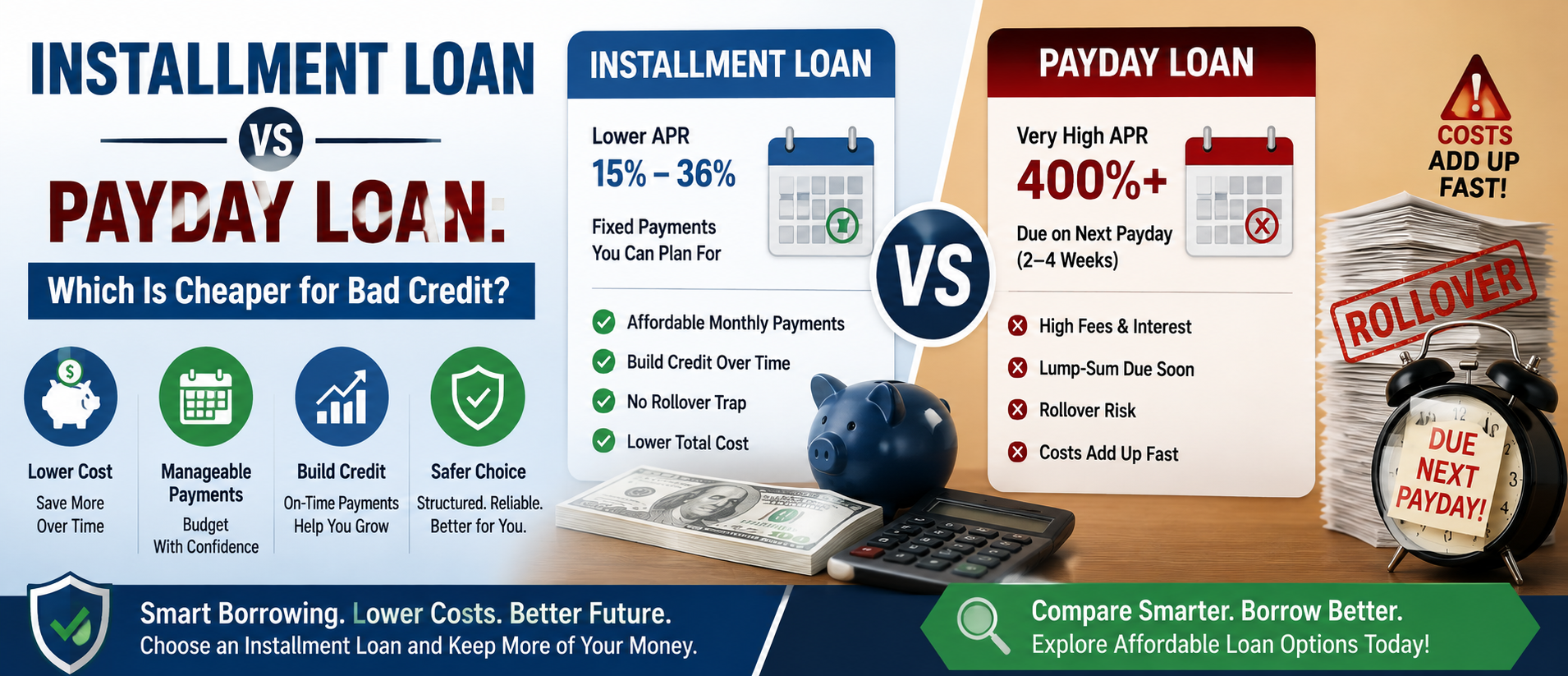
A payday loan is an advance of a small amount of money (usually a few hundred dollars) that is payable on the next payday, usually within 2-4weeks. There is no repayment programme, you pay the full sum (plus fees) on that date, or simply make it a new loan entailing another set of fees.
A repayment plan for an installment loan, on the other hand, is structured into a series of fixed, scheduled repayments, weekly, biweekly or monthly, over several months or even years, depending on the amount of the loan. They are used to pay off a portion of the principal and interest, similar to a car loan or a mortgage, although smaller and for a shorter term.
It is that structural change that accounts for the price difference. The fee on a payday loan is typically $15 to $30 for every $100 loaned, but with the short repayment period, this flat fee becomes an annualized percentage rate of 400% or more APR. The interest on an installment loan is distributed over a much longer period of time, resulting in an effective APR that is far lower, even if the borrower is using the same bad-credit profile and, for a reputable bad-credit installment loan, would be in the range of about 15% to 36% APR depending on the lenders and state laws (rates vary by lender and state).
Is an Installment Loan Better Than a Payday Loan?
Is an installment loan better than a payday loan, in practical terms? For nearly every borrower, yes, and the reasons go beyond just the APR gap.
- Lower total cost. Even accounting for the longer time you’re paying interest, the dramatically lower APR on an installment loan usually means you pay less in total dollars than you would rolling over payday loans, especially if repayment takes more than one cycle.
- A repayment schedule you can actually plan around. Fixed monthly or biweekly payments are easier to budget for than a single lump sum due in two weeks. A structure that assumes your entire financial situation will resolve itself before the very next paycheck, which is rarely realistic for someone who needed the loan in the first place.
- No rollover trap. Payday loans are notorious for rolling them over and taking out a new loan as a way to repay the first one, with new fees, and over, and over again, increasing the cost of the loan by several times the original $300 loan amount. Installment loans don’t have this mechanism, you’re paying down the balance with every payment, not restarting the clock.
- Credit-building potential. Consistent on-time payments will help improve your credit score over time, as many installment lenders report on time payments to the credit bureaus. There’s not much benefit even if you pay the loan back on time; most payday lenders do not report positive payment history.
The one place payday loans sometimes look more appealing on paper is speed and simplicity for a very small amount you’re confident you can repay immediately, but for the majority of bad-credit borrowers, the installment structure is both cheaper and safer.
Payday Loan Alternatives for Bad Credit
If you’re weighing payday loan alternatives bad credit borrowers can actually qualify for, a few options are worth checking before committing to either a payday loan or a standard installment loan. Depending on your income situation, one of our other guides may fit your circumstances more directly than a general comparison can, including options for gig workers and freelancers with irregular income:
- Credit union Payday Alternative Loans (PALs). Federal credit unions offer PALs specifically designed to undercut payday loan costs, with rates capped by federal rule at 28% APR and terms typically running one to twelve months.
- Bad-credit installment loans from online lenders. There are lots of lenders that specialize in lending to customers with bad credit scores and instead focus on stability of income and employment in addition to credit score history instead of having a credit score cutoff.
- Nonprofit and community assistance programs. For specific needs like utility bills or emergency expenses, local assistance programs sometimes cover the gap entirely with no repayment required at all, worth checking before taking on any loan.
- A secured loan against savings, if available, which typically carries a lower rate than an unsecured installment loan since the lender’s risk is minimal.
Why the Structure Matters More Than the Marketing
Payday lenders often market speed and simplicity: “cash by tomorrow,” “no credit check”, and those claims are usually true. What the marketing doesn’t emphasize is the annualized cost of that convenience, or how quickly a short repayment window can turn into a rollover cycle for a borrower who was already tight on cash to begin with. An installment loan asks for a bit more paperwork and a slightly longer approval process in some cases, but the fixed schedule and dramatically lower APR make it the safer structural choice for almost anyone comparing the two, bad credit or not.
Comparing Your Actual Options
While there’s no doubt the right option will vary based on your loan size, your timeline and your monthly budget, the one thing that most bad-credit borrowers could do to save money is to choose an installment structure instead of a payday loan. If you want to compare installment loan offers based on your credit profile and income, theloans.pro provides educational resources on loan types alongside tools to compare options before you commit to anything.
FAQs
What’s the main difference between an installment loan and a payday loan?
An installment loan is paid back in regular, scheduled monthly payments over the course of several months, whereas a payday loan is payable in a single payment on your next payday, which is typically within a couple months.
Why are payday loans so much more expensive than installment loans?
The fees levied against payday loans are fixed for a short repayment period, which turns into APRs typically around 400% or more. Installment loans, on the other hand, will have a lower APR (15–36%) for bad credit borrowers, but the interest will be spread out over a longer period of time.
Can an installment loan help rebuild my credit?
Many installment lenders report payment history to credit bureaus, so consistent on-time payments can help build credit over time, something most payday lenders don’t offer since they typically don’t report positive payment history at all.
What’s a safer alternative to a payday loan if I have bad credit?
Credit union Payday Alternative Loans (PALs), capped at 28% APR by federal rule, and bad-credit installment loans from lenders that weigh income and employment alongside credit score are both generally safer and cheaper than a payday loan.

 Content List:
 Applying does NOT affect your FICO® Score!