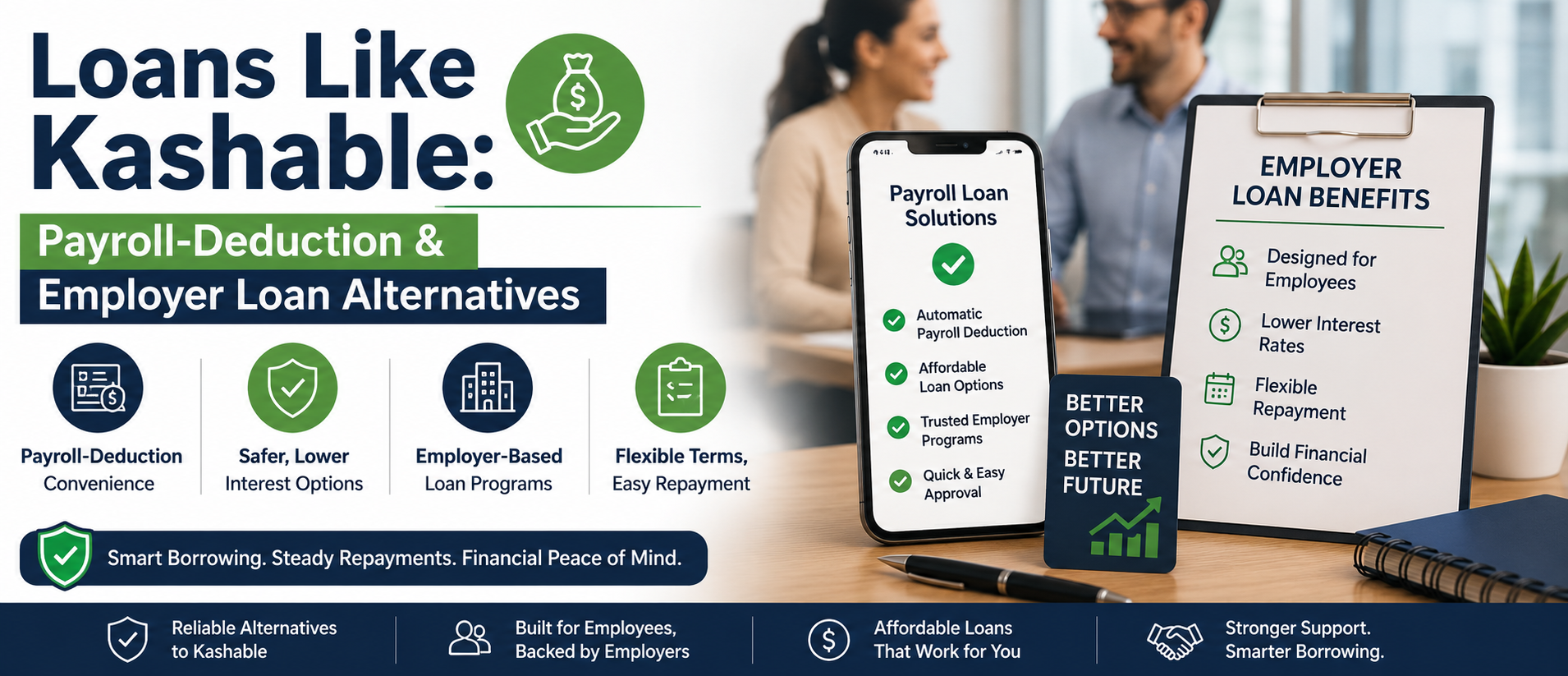
Most loan comparisons focus on apps and online lenders. There is a more understated and less publicized aspect to the lending business that operates somewhat differently—loans that are extended as a true fringe benefit rather than a bank draft or through manual payment; loans that are paid back automatically through the paycheck. If you’ve heard of Kashable via the HR portal and are looking to see what other major players are around in this category, here’s a breakdown of how loans like Kashable work, the other major names in the space, and what to check before signing up for any of them.
What Makes Payroll-Deduction Loans a Different Category
Payroll deduction loans are not only based on a relationship between you and a bank, they also have a relationship with a lender and your employer. Once approved, the loan is automatically deducted from your paycheck, so you won’t have to keep track of when it’s due or pay it separately.
This is a win-win situation. The lender does not have to worry about receiving their money and the borrower’s bank account being overdrawn or their repayment system becoming inactive. That lower risk is typically translated into lower interest rates on the loan than a typical unsecured personal loan or payday product, and the loan is often more easily approved based on employment stability and income instead of just credit score. The downside is availability: these programs only exist if your particular employer has chosen to offer one, and not every employer will offer them even if they’re a great match.
Kashable: The Employee Benefit Model
Kashable is the most widely recognized name in this space, offered as a voluntary financial wellness benefit to more than 300 employers, usually those that have 300 or more benefits-eligible employees. The range of loan amounts is between $250 and $30,000 over a term of 6 to 36 months, and the APRs vary from 6% to as high as 35.99%, depending on your financial profile. The application process takes several minutes online and won’t affect your credit score, and approved funds will be deposited in 1-3 business days.
Repayment is automatically deducted from your payroll system and if you change jobs with a repayment amount still to be paid, Kashable’s team contacts you directly to organise an alternative repayment method outside of payroll.
TrueConnect: The No-Credit-Check Alternative
Loans like TrueConnect work on a similar payroll-deduction model but with a narrower, more standardized structure. TrueConnect loans are provided by Sunrise Banks, a federally chartered bank, and are generally a maximum of 8% of the employee’s annual income, and amounts typically do not exceed $3,000 to $5,000, depending on the program offered by each employer. The repayment period is typically fixed at 12 months, and a flat APR is applied, which is generally around 20–25%, but the range for this is much lower than normal payday loan rates, and is independent of the credit history of the borrower.
Some employer programs also offer an optional credit-check tier with lower rates for employees with stronger credit. Like Kashable, there’s no penalty for paying the loan off early, and on-time payments are generally reported to credit bureaus, which can help build credit over time.
Lendly: A Newer Entrant Worth Extra Diligence
Loans like Lendly are marketed similarly, payroll-linked repayment, fast approval, less emphasis on credit score, with loan amounts generally in the $500 to $2,000 range aimed at hourly and salaried workers who might not qualify for traditional credit. Here’s where extra care matters: multiple sites operate under Lendly-adjacent branding, and the terms attached to them are not consistent. Some describe Lendly as a licensed, state-regulated consumer finance company with standard installment terms; others describe payroll-linked products carrying APRs closer to what you’d see on a short-term payday loan, in the range of 150–200%.
Before signing anything through a Lendly-branded offer, confirm you’re on the actual lender’s verified site, read the specific APR and total repayment cost in writing, and don’t assume “payroll deduction” automatically means “low cost” the way it does with more established employer-benefit programs like Kashable or TrueConnect.
Finding Employer Loan Alternatives at Your Own Workplace
If your employer doesn’t currently offer Kashable, TrueConnect, or a similar benefit, a few practical steps can help:
- Check with HR or your benefits portal directly, payroll-deduction loan benefits are sometimes listed alongside other voluntary benefits like pet insurance or legal plans, and easy to overlook if you’re not looking specifically.
- Ask if your employer would consider adding one. Many of these programs cost employers little to nothing to implement, since the lending relationship is between the employee and the loan provider, not the company itself, HR departments are sometimes open to employee-driven requests.
- Compare against a credit union Payday Alternative Loan (PAL) if payroll deduction isn’t available to you, PALs are federally capped at 28% APR and function as a similarly structured, lower-cost alternative to high-interest short-term credit.
What to Verify Before You Borrow, Regardless of the Provider
Whichever employer loan alternatives you’re considering, a few checks apply across the board: confirm the exact APR and total repayment amount in writing before signing, check whether the loan reports to credit bureaus (helpful if you’re rebuilding credit), and understand what happens to the balance if you leave your job before the loan is repaid. Programs vary meaningfully on that last point, some transition you to a standard repayment method, others may accelerate the balance, so it’s worth knowing the answer before you actually need the money in a hurry.
Comparing Your Full Range of Options
Payroll-deduction loans are one option among several for accessing lower-cost credit, and whether one is available to you often depends entirely on your employer. If you want to see a broader range of installment loan options based on your income and credit profile, payroll-based or otherwise, you can compare offers through theloans.pro, which connects borrowers with lenders across a range of loan types and eligibility profiles.
FAQs
How do payroll deduction loans differ from a regular personal loan?
Repayment is automatic from your paycheck, rather than by a separate bank draft, and is often more strongly influenced by your job stability than your credit score, leading to lower interest rates than an equivalent unsecured personal loan.
Is Kashable available to everyone, or only through certain employers?
It’s not something that you can sign up for on your own, Kashable can be only used by employees of companies that have partnered with a program, typically companies with 300 or more benefits-eligible employees.
Are all payroll-deduction loan products low-cost?
No. There are some payroll linked products that have the same names, but may have much higher APRs, so always check what rate and terms they offer before signing up to one of these employer benefit products – others such as Kashable and TrueConnect are capped and disclosed rates.
What happens to a payroll-deduction loan if I leave my job?
This will vary according to the provider, some will move over to direct repayment with the employee, or they may want repayment to be quicker – so it’s best to understand this before you borrow.

 Content List:
 Applying does NOT affect your FICO® Score!