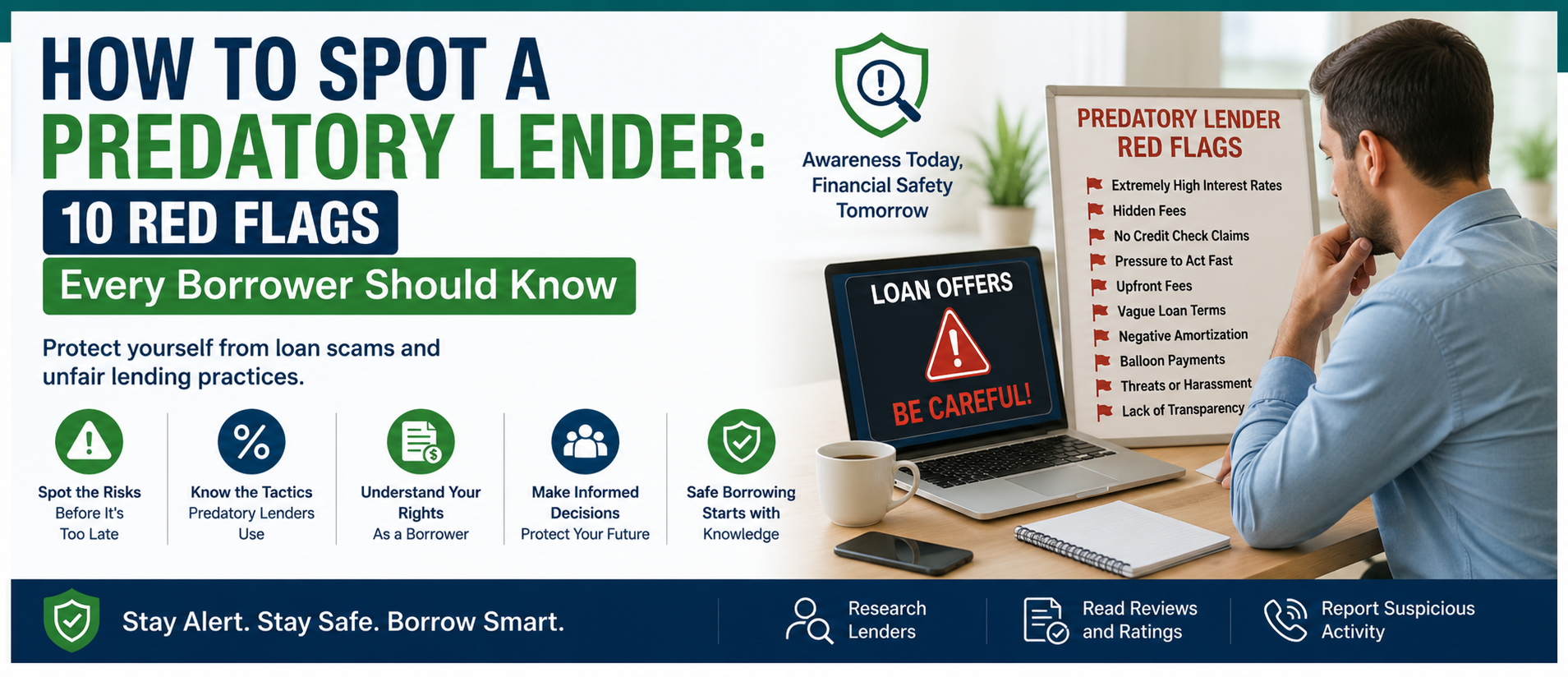
Predatory lending isn’t always illegal, which is exactly what makes it dangerous. Many of these practices fall into a legal gray area, where they are legal in some states and banned in others and are designed to maximize the amount of money borrowers pay for loans as they have very few alternatives. Knowing the specific warning signs matters more than trusting a predatory lender’s marketing, and these ten red flags cover the patterns that show up again and again.
1. Interest Rates Far Above What Your Risk Actually Justifies
There’s no single legal cutoff that defines a predatory rate, but 36% APR is the more commonly cited benchmark by consumer advocates and the CFPB. It’s not a coincidence that rates above 36% for service members and their dependents are capped by the Military Lending Act: rates this high are considered to cause the service member financial damage, regardless of their credit score. One of the easiest signs is a rate that is much higher than you’re expecting, based on your credit history.
2. Vague or Dismissive Answers About Fees and Terms
Consumer finance experts say the real red flag is not when customer service avoids answering questions about fees, interest or penalties outright or in a vague or evasive manner. If a lender is legitimate, he or she will be able to tell you your APR, the total repayment amount and all the fees right off the bat. Reluctance to answer plainly is often a sign the real numbers don’t look good written down.
3. No Interest in Checking Your Credit or Ability to Repay
It sounds counterintuitive, but a lender that doesn’t want to check your credit or verify your income isn’t doing you a favor. It’s a clear sign they may be planning to profit regardless of whether you can actually repay. Predatory lenders sometimes make more money when a borrower struggles and needs to refinance or roll over a loan than when the loan is repaid cleanly, which removes their usual incentive to verify repayment ability in the first place.
4. Balloon Payments
A balloon payment loan requires a large lump sum at the end of the term, or in the case of many payday loans, within just two weeks. These are frequently structured to be unaffordable for the exact borrowers taking them out, which pushes them toward rolling over the loan or refinancing, generating another round of fees without ever meaningfully reducing the principal owed.
5. Pressure to Borrow More Than You Asked For
If a lender pushes you toward a larger loan amount than you originally requested, that’s worth pausing on. This tactic increases the lender’s fee income and interest earned, and it’s a documented pattern across predatory lending, particularly with home equity and personal loans targeting borrowers who may not fully register how much additional cost that larger amount actually adds.
6. Prepayment Penalties
A loan that charges you a fee for paying it off early tells you something important: the lender is counting on collecting interest over the full term, not just getting repaid. Legitimate lenders increasingly compete on offering no prepayment penalty at all, so a loan that punishes early repayment is worth extra scrutiny, especially if there’s any chance your financial situation could improve during the loan term.
7. Urgency and High-Pressure Sales Tactics
Predatory lenders and brokers rely heavily on urgency, phrases like “this rate is only good until end of day,” repeated calls, or pressure to sign electronically before you’ve actually read the agreement. This is deliberate. A contract you actually take time to read is a contract you might reject, which is exactly why rushing you past that step benefits the lender, not you.
8. Confusing Rate Structures That Obscure the Real Cost
Some lenders, especially in business lending, may use a “factor rate” instead of a definite APR, which can make a loan appear much less expensive than it really is. If you take out a loan on $50,000 at a 1.4 factor rate, for instance, you end up paying out $70,000 over the entire loan term; and some factors rates are deceptive because the actual annualised cost of the loan can be much higher than the initial factor rate on the face of it. When a lender refuses to answer directly when you ask him or her to translate its pricing into a clear APR and total dollar repayment, this is a warning sign, too.
9. Encouragement to Refinance Before Your Current Loan Is Paid Off
Being repeatedly encouraged to refinance an existing loan before it’s actually paid down, sometimes called “loan flipping,” generates new origination fees for the lender each time without necessarily benefiting you. This pattern shows up frequently in predatory mortgage and personal loan practices, and it’s worth asking directly what concrete benefit a refinance offers before agreeing, rather than assuming a new offer is automatically an improvement.
10. Waivers of Your Legal Rights Buried in the Contract
Some high-cost lenders, particularly in business financing, include a confession of judgment clause or similar waiver deep in the loan agreement, language that lets the lender obtain a legal judgment against you, sometimes freezing your bank accounts, without you ever getting the chance to contest a claimed default in court first. Several states have banned this specific practice, but it still appears in contracts from lenders operating across state lines. If a lender insists on including a clause like this, walking away is the right call regardless of how good the rest of the offer looks.
What to Do If You Spot These Signs
If a lender you’re considering shows even two or three of these signs, it’s worth shopping around before signing anything. Once you have all the offers from several reputable lenders in your comparison, it becomes much easier to see any outliers. Inquire for the total number of repayments and the total APR; never request a rate or a factor rate, as APR is the only number that shows the annualised cost of the loan in different formats.
If you think you have been a victim of a predatory loan, you can make a complaint directly to the CFPB consumerfinance.gov/complaint, to your state attorney general, or to your state banking regulator, all of which have the authority to investigate predatory lending practices and to take enforcement action.
Comparing Legitimate Options
The best defense against predatory lending is having real, transparent options to compare against a suspicious offer. If you want to see loan terms clearly laid out and compare offers from lenders across a range of credit profiles, theloans.pro provides educational resources on loan types and terms alongside tools to compare offers before you commit to anything.
FAQs
What’s considered a predatory interest rate?
There’s no single official cutoff, but 36% APR is the most commonly cited benchmark among consumer advocates and regulators, and is the limit imposed by the Military Lending Act for active-duty service members and the dependents of active-duty servicemembers.
Is predatory lending illegal?
Not always. Some practices, like not disclosing APR under the Truth in Lending Act, are illegal in all states. Some lenders such as high-cost payday lenders are legal in certain states and illegal in approximately 18 states and D.C., so it is important to understand the specifics of the practice and where you live.
What should I do if I think a lender is being predatory?
Ask for the full APR and total repayment amount in writing, compare the offer against other legitimate lenders, and if you think that the lender is violating the law, contact the CFPB, your state attorney general or your state banking regulator.
Are payday and title loans always predatory?
They’re not inherently bad, but they’re always the signs of predatory lending, triple-digit APRs, short repayment periods and the cycle of repeat borrowing, so they’re not a normal borrowing option

 Content List:
 Applying does NOT affect your FICO® Score!