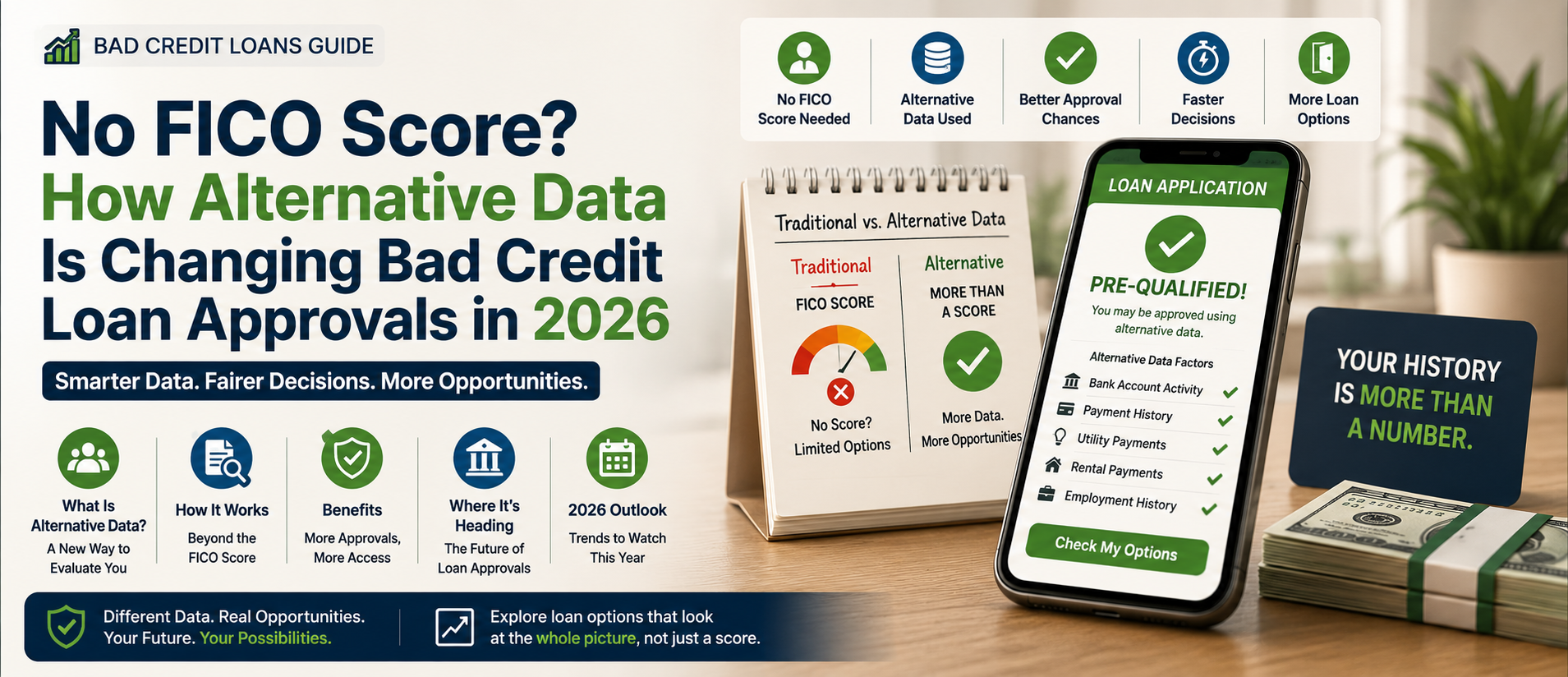
In the absence of a FICO score or thin credit report where there isn’t enough information to generate a proper score, the applicant was likely to be rejected in the past by virtually all creditors. Times have changed. By 2026, a larger number of lenders will rely on alternative data in making decisions on loan applicants who do not have a credit score.
Why “No Credit Score” Isn’t the Same as “Bad Credit”
This distinction needs to be made clearly, as there is a lot of confusion between them. Poor credit refers to your credit history; it shows that you have made some missed payments, have a high utilization rate, or have defaulted previously. “No credit” or “thin file,” on the other hand, means that there is not enough credit history in order for the scoring agencies to come up with an accurate score.
This population is genuinely large. Roughly a quarter of the U.S. adult population is considered thin-file, and research from Plaid estimates that around 19 million additional US adults could be evaluated for credit using alternative data instead of relying solely on a traditional score. These aren’t necessarily risky borrowers. They’re often just invisible to a scoring system built around traditional trade lines.
What “Alternative Data” Actually Means
Alternative data is any financial or behavioral information used to assess creditworthiness that falls outside the standard credit bureau file. In practice, lenders using this approach commonly pull from several categories:
Cash flow and bank transaction data. Real-time information on income, expenses, and account balances, pulled directly from a borrower’s bank account with their permission, giving lenders a current picture of actual ability to repay rather than a historical score.
Rent and utility payment history. On-time rent payments and utility or telecom bills are strong indicators of financial reliability that traditionally never made it into a credit file at all, despite often being someone’s largest recurring monthly obligation.
Payroll and income verification data. Direct, consumer-permissioned connections to payroll systems that confirm income and employment stability without requiring a borrower to submit pay stubs manually.
Nonbank payment history. Point-of-sale financing, buy-now-pay-later plans, and other nontraditional credit products that show a pattern of borrowing and repayment behavior outside the conventional system.
Why Lenders Are Actually Adopting This
This shift isn’t just idealism about financial inclusion, though that’s part of the pitch. It’s also a genuine business decision. According to a 2026 Nova Credit survey, 90% of lenders say access to alternative data would assist them to lend more to the creditworthy individuals who would not otherwise qualify using the traditional approach where the focus is on the score. The cash flow underwriting enables the lenders to get an idea of what happens to the money of the borrower in real time, unlike the old score that reflects on past decisions.
Regulators have taken notice too. The Consumer Financial Protection Bureau has approved sandbox programs allowing institutions to experiment with cash flow data in small-dollar loan underwriting, and its own prior research found cash flow data genuinely useful in assessing credit risk. Separately, proposed legislation would let utility companies and HUD report rental and utility payments directly to credit bureaus, which would push this shift even further into the mainstream credit system over time.
What This Means If You Have No FICO Score
If you’ve been turned away by traditional lenders specifically because you lack sufficient credit history, alternative data underwriting genuinely changes your options, though it’s worth approaching this with realistic expectations rather than assuming every lender has adopted it.
A few practical points matter here. Not every lender uses alternative data yet, so it’s worth specifically looking for lenders who advertise cash flow underwriting, income-based approval, or “credit invisible” friendly programs, rather than assuming any bad-credit lender automatically evaluates you this way. When you do apply, expect to be asked to securely connect your bank account or provide access to transaction history, since that’s the mechanism most alternative data underwriting actually runs on. And building a track record on the alternative signals that do get reported, on-time rent payments through a service that reports them, consistent utility payments, can help you build toward a traditional score over time as well, not just unlock alternative approval in the moment.
Comparing Lenders That Look Beyond Your Score
The practical challenge is that alternative data adoption varies enormously by lender, and there’s no single standard yet for which signals get weighted or how heavily. That makes comparing actual offers more important than ever, rather than assuming any two “bad credit friendly” lenders are evaluating you the same way. If you want to compare loan options and understand which lenders look at factors beyond a traditional credit score, theloans.pro provides educational resources on loan types and underwriting alongside tools to compare offers before you apply anywhere.
FAQs
What’s the difference between having bad credit and having no credit score?
Bad credit means you have a credit history reflecting past missed payments or high debt use. No credit score, or a thin file, means there isn’t enough history for a traditional score to be calculated at all, which is a different problem alternative data underwriting is specifically designed to address.
What kind of data do lenders look at instead of a FICO score?
Common alternative data sources include bank account cash flow and transaction history, rent and utility payment records, payroll and income verification data, and payment history with nonbank credit products like buy-now-pay-later plans.
Do I have to share my bank account information for this kind of underwriting?
Typically yes, most cash flow underwriting works through a secure, consumer-permissioned connection to your bank account, similar to linking accounts in a budgeting app, rather than the lender accessing your information without consent.
Will using alternative data lenders help build my traditional credit score too?
It depends on the lender. Some report payment history to traditional credit bureaus, which can help build a conventional score over time, while others use alternative data purely for their own underwriting decision without reporting anywhere. It’s worth confirming this directly before choosing a lender if building traditional credit is also a goal.

 Content List:
 Applying does NOT affect your FICO® Score!